How to host your first small-room experience in Singapore
A practical field guide for turning a dinner, walk, listening room, workshop, or salon into a gathering people actually want to show up for.
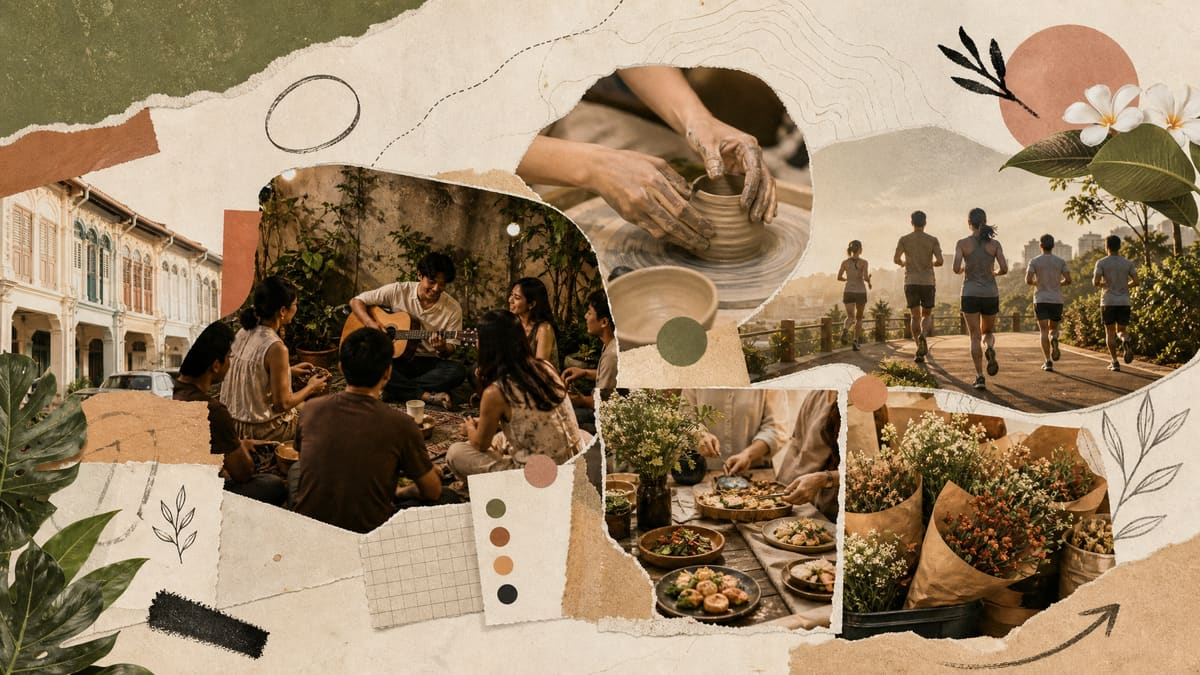
The best small-room experiences in Singapore usually start as something ordinary: a table that seats eight, a studio that gets beautiful light at 10am, a route through hawker stalls you already love, a friend who knows how to make strangers feel safe. The work of hosting is not to make it bigger. It is to make the invitation clearer.
Start with one sentence
Before you book the room, pick the date, or design a flyer, write the experience down in one sentence: who is this for, what will happen, and why is it worth leaving home for? "A quiet Saturday ceramics table for people who want to make something with their hands" is stronger than "creative networking workshop." Specificity lowers anxiety. It tells the right people they belong before they arrive.
If you cannot write that sentence cleanly, the room isn't ready yet. Keep editing the sentence until your friend, your mother, and a stranger on the MRT can all picture exactly what they'd walk into.
Keep the first version small
Twelve people is often better than fifty. A small room lets the host notice awkwardness, protect the tone, and make small adjustments in real time. If the format depends on conversation, make the seating and arrival flow do some of the work: name cards, a shared table, a visible host, and a first five-minute activity that does not feel like school.
Capacity is a feature, not a constraint. The smaller room is the better room — almost every time.
Price it with respect for both sides
Free events create no-show risk; expensive events create expectation pressure. A modest paid ticket, a clear refund policy, and an honest description will usually produce a better room than broad free RSVP demand. People treat what they pay for with intention. They show up.
Write the listing like a host, not a marketer
Mention the mood. The practical details. What is included. Who should skip it. What happens if someone comes alone. Singapore has enough things to do; people are looking for rooms they can trust. The listing is the first thing they trust you with — treat it that way.
Hosting a small room well is its own quiet craft. You won't get every detail right the first time. But the people who come will tell you, through how they linger and what they message you afterwards, exactly which parts to keep.